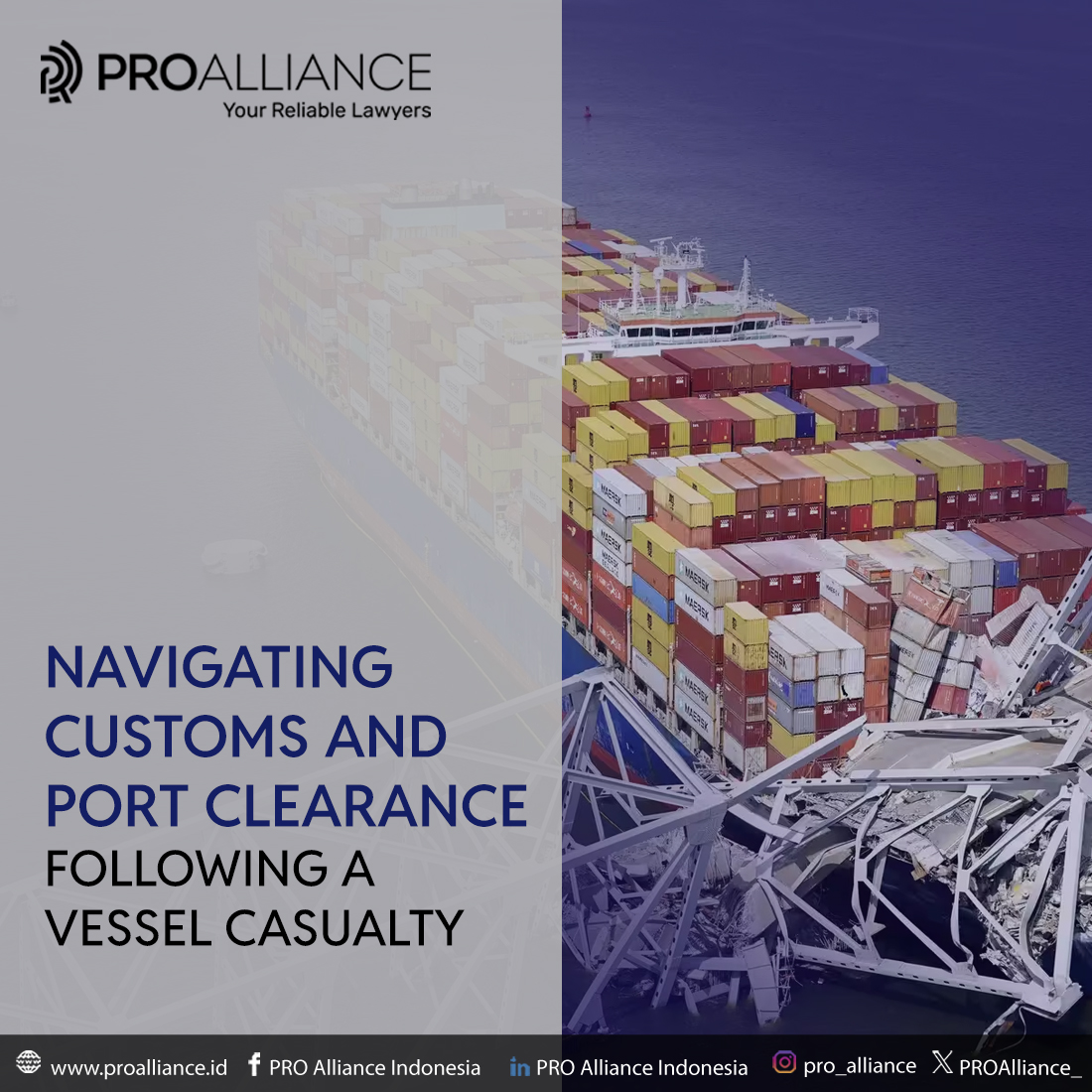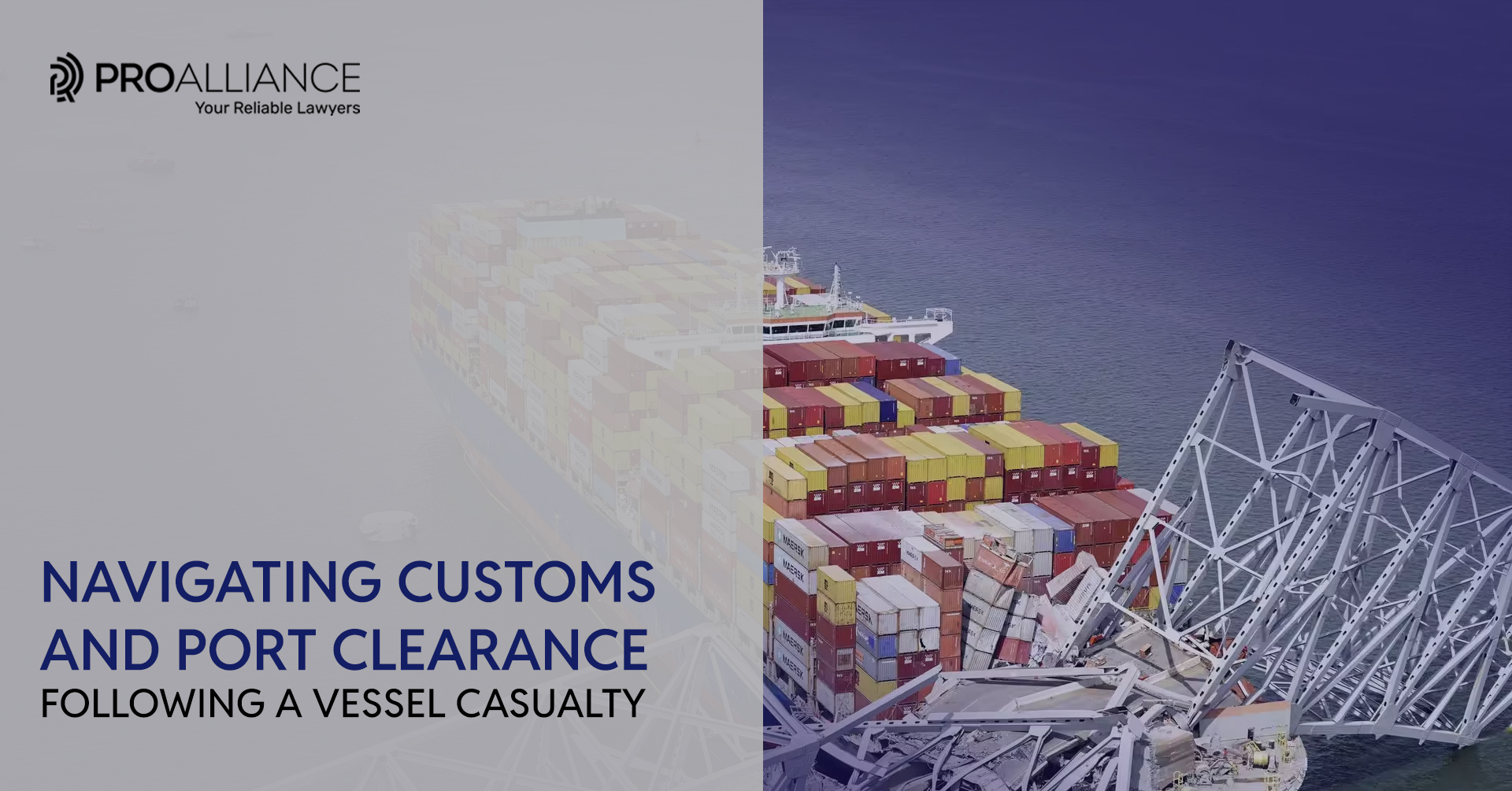
NAVIGATING CUSTOMS AND PORT CLEARANCE FOLLOWING A VESSEL CASUALTY
Background
Recently, we have noted an occurrance wherein a foreign-flagged vessel carrying export cargo from an Indonesian port was involved in a grounding incident during her voyage (“Vessel A”) and thus, raising customs issues as will be elaborated below. Following the incident, the cargo on board Vessel A was transferred through a Ship-to-Ship transfer (“STS”) operation to a foreign-flagged sister vessel (“Vessel B”) to continue the delivery of the cargo.
In the abovementioned circumstances, the Harbour Master at the relevant Harbour Master and Port Authority Office (Kantor Kesyahbandaran dan Otoritas Pelabuhan/“KSOP”) required Vessel B to obtain a Port Clearance (Surat Persetujuan Berlayar/“SPB”) supported by customs documentation reflecting the actual carrying vessel. The required customs documentation includes an amendment to the Export Declaration (Pemberitahuan Ekspor Barang/“PEB”) for the Vessel B, although it carries the same cargo (as the cargo carried previously by Vessel A). The exporter of the cargo refused to arrange the amendment of PEB because the cargo was sold on a Free-on-Board (“FOB”) basis. This raises questions regarding the available recourse for Vessel A and B, its owners and/or charterers, as well as the measures that could mitigate similar risks in the future.
PEB Amendment Following the Vessel Substitution
In the foregoing circumstances, the Customs Office directed the parties to obtain an amendment to the PEB. Legally speaking, Article 25 paragraph (1) of Minister of Finance Regulation No. 155/PMK.04/2022 on Customs Provisions in the Export Sector (“MoFR 155/2022”) provides that a PEB may be amended by the exporter and/or its Customs Services Handling Entrepreneur through the customs electronic system. Such amendments may be submitted within 30 (thirty) days from the registration of the PEB. As additional notes, for a change of carrying vessel where the export goods/cargo have not been transported, the amendment must be submitted within 3 (three) days from the original vessel’s departure. If such deadlines have passed, the exporter may still submit the amendment, subject to approval from the Head of the relevant Customs Office.
Accordingly, the original PEB identifying Vessel A as the carrying vessel does not enable Vessel B to proceed using the same PEB where the actual carriage is subsequently undertaken by Vessel B. The PEB should instead be amended to reflect the actual carriage arrangement. In this line, the amendment to the PEB may only be submitted by the initial exporter of the cargo (and not by the owner and/or charterer of Vessel B).
Further, related to the FOB incoterms, the Customs Office takes the view that so long as the cargo is still within Indonesian Customs Territory, then the exporter identified under the PEB will remain act as an exporter and thus, shall be responsible for the relevant customs obligations upon the cargo. This is also in line with Article 3 paragraph (1) of MoFR No. 155/2022, which requires the exporter to ensure that the information declared in the PEB is complete and accurate. The FOB arrangement governs the allocation of commercial costs and delivery obligations between the parties, but does not transfer the exporter’s customs responsibilities to the owner and/or charterer of Vessel B.
Practical Options for Vessel B in Addressing Customs Issues
In case a similar event occurred, there are several practical options that can be considered by vessel owners, i.e.:
- Writing a formal notification to the cargo interests to request the exporter identified under the PEB to promptly arrange the required PEB amendment (for Vessel B’s departure). If the vessel owner has no direct communication with the cargo interests, the request for the PEB amendment may be conveyed through the charterer.
- If the exporter continues to decline the amendment, seek further guidance from the Customs Office on the available options for Vessel B to proceed with the cargo delivery.
- Consider returning the cargo from Vessel B to Vessel A once Vessel A has been repaired and deemed seaworthy, and proceeding with the original PEB. This is particularly worth considering, taking into account that, in the case encountered, the cargo was ultimately able to be transferred back to Vessel A under the original PEB, even though more than one month had elapsed since the PEB registration date.
Recommendations
To avoid any deadlock discussion between the vessel owner, the charterer and/or cargo interests in the transportation of the cargo, it may be advisable for the parties to ascertain under the contract on the following items:
- The parties’ obligation to promptly cooperate and not withhold or delay any required filing or application, in connection with customs documentation, e.g. any amendment to the PEB and other relevant customs documentation;
- The vessel owner’s right to establish a reasonable deadline for the fulfilment of any required customs obligations by the charterer and/or cargo interests. If such obligations are not fulfilled within the specified deadline, the vessel owner may be entitled to terminate the relevant contract and/or recover the costs and losses arising from the resulting delay, including through direct payment by the party responsible, subject to the agreed contractual terms.
- An obligation to promptly notify the relevant parties of any incident and maintain communication regarding the mitigation measures undertaken, particularly where a vessel substitution may require additional or amended customs documentation. This would ensure that all relevant parties, including the cargo interests, are promptly informed of the incident and have sufficient time to take the necessary steps to fulfil their respective customs obligations.
At PRO Alliance, we assist clients in navigating maritime and shipping regulations, addressing customs and port clearance issues arising from vessel casualties and substitutions, and mitigating related contractual risks. If your operations involve similar circumstances, we are ready to support your operations through regulatory guidance, documentation assistance, and practical contractual solutions.